Message from Seizo Onoe, Director,
Telecommunication Standardization Bureau, ITU
|
Dear Colleagues,
Welcome to the latest
edition of the Digital Transformation and Cities Digest.
The value of AI,
digital twins and the Internet of Things lies in what they deliver for
people: better services, stronger resilience and more informed decisions.
International standards, interoperability and collaboration are essential
to turn this potential into lasting benefits for cities.
This edition
highlights progress from global vision to local action. The first
United Nations Pavilion at Smart City Expo World Congress connected
cities with UN expertise, while new guidance co-led by ITU and UN-Habitat
offers practical tools for people-centred AI adoption.
As the United for
Smart Sustainable Cities (U4SSC) initiative marks ten years, new
publications and city assessments connect shared knowledge with
measurable local progress. We also highlight advances in citiverse
standardization, digital solutions for urban climate action and
opportunities to contribute to 2nd meeting of ITU Focus Group on AI for
Smart Sustainable Cities and Communities in Manchester.
I invite you to use
these resources, share your experience and help shape the standards and
solutions cities need. Together, we can turn digital innovation into
better lives for communities worldwide.
We welcome your
feedback at digitaltransformation@itu.int.
Sincerely,
|
|
Seizo Onoe,
Director, Telecommunication Standardization Bureau, ITU
|
From Global Vision to Local Action: ITU and the United
Nations at Smart City Expo World Congress
|
A Historic First: United Nations
Pavilion Brings Global Expertise to the World's Cities
For the first time,
the United Nations established a dedicated Pavilion at the Smart City
Expo World Congress (SCEWC) on 3-5 November 2026 in Barcelona, bringing
together 17
UN entities
under one roof to advance a shared vision for people-centred, inclusive
and sustainable cities.
Jointly organized by
ITU and UN-Habitat, the Pavilion connected mayors, policymakers and
technology innovators with UN expertise. Across 26 events over three
days, it brought One UN collaboration to life, linking global knowledge
with local priorities and opportunities for action.
One UN in Action: Bringing the United
Nations Closer to Cities
Through a dedicated
series of UN in
Action sessions, participating organizations showcased
initiatives spanning digital inclusion, innovation, sustainability,
school connectivity and urban development. Contributions from UNICEF,
UNHCR, WIPO, FAO, UN Women, UNDP, UNEP, UN ESCAP, UNITAR, UNU-EGOV and
the joint ITU–UNICEF Giga initiative helped illustrate the
diversity of UN expertise available to cities.
The Pavilion also
welcomed international delegations for high-level exchanges, technical
discussions and networking. Support from media partner SmartCitiesWorld
and a reception hosted by the Global Cities Hub helped extend these
connections.
From Global Expertise to Standards in
Practice
These exchanges
highlighted how international standards translate into local action. ITU-T Study Group 20 “Internet of Things, digital twins
and smart sustainable cities and communities”
offers more than 200 freely available international standards to help
cities connect technologies, improve services and advance sustainable
development. ITU recognized CINTEL for implementing Recommendation
ITU-T Y.4903 in 125 Colombian cities, bringing its worldwide
implementation to more than 350 cities; OASC for implementing Recommendation
ITU-T Y.4505 on Minimum Interoperability Mechanisms; and the LoRa
Alliance for implementing Recommendation
ITU-T Y.4480 on energy-efficient, long-range IoT connectivity.
Ten Years of U4SSC: A Decade of Global Cooperation, A New
Chapter for Cities
|
The United for Smart
Sustainable Cities (U4SSC) initiative celebrated
its 10th anniversary in Barcelona, marking a decade of international
cooperation to help cities become smarter, more sustainable and more
inclusive. Today, U4SSC brings together 22 UN entities and more than
1,200 active experts, connecting international standards, policy
expertise and practical tools to support cities worldwide. The
anniversary celebration looked ahead to AI-enabled urban development
while recognizing the leaders and partners behind U4SSC’s work.
To mark this
milestone, 16 new publications were launched, covering topics including
AI governance, urban AI agents, digital transformation assessments, smart
tourism, digital public infrastructure security and data spaces.
Together, these resources provide cities with practical guidance to
navigate emerging technologies and turn digital innovation into
measurable public value. Explore
U4SSC publications here.
A Global Milestone: New UN Guidelines
Put People in Charge of AI in Cities
|
|
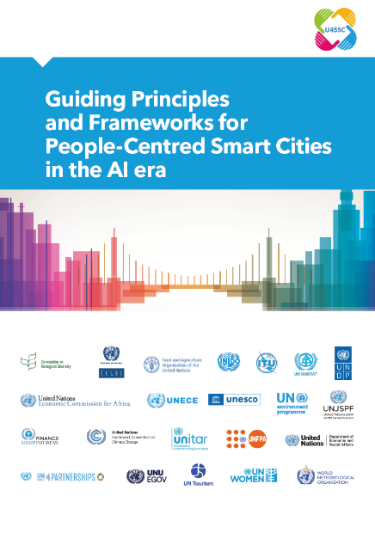
On 4 November 2026,
ITU and UN-Habitat launched the Guiding Principles and Frameworks for People-Centred
Smart Cities in the AI Era, providing cities with practical guidance to adopt AI
responsibly, inclusively and transparently.
Unveiled by
UN-Habitat Executive Director Anacláudia Rossbach and ITU Deputy
Director of the Telecommunication Standardization Bureau Bilel
Jamoussi, the Guidelines are the first deliverable of the new UN People-Centred AI Toolbox.
Dubai, Málaga and
Baghdad were announced as the first cities to pilot the Guidelines,
demonstrating growing momentum to ensure that AI serves people and
communities.
|
Your City Could Be Next: Pilot the UN
Guidelines
ITU and UN-Habitat are
inviting cities worldwide to pilot the Guidelines, share implementation
experience and help shape the next phase of people-centred smart city
development. Interested
cities are invited to submit their Expressions of Interest by 31 March
2027 to u4ssc@itu.int.
Read the UN press release here.
Measuring Progress
with U4SSC
KPIs
|
|
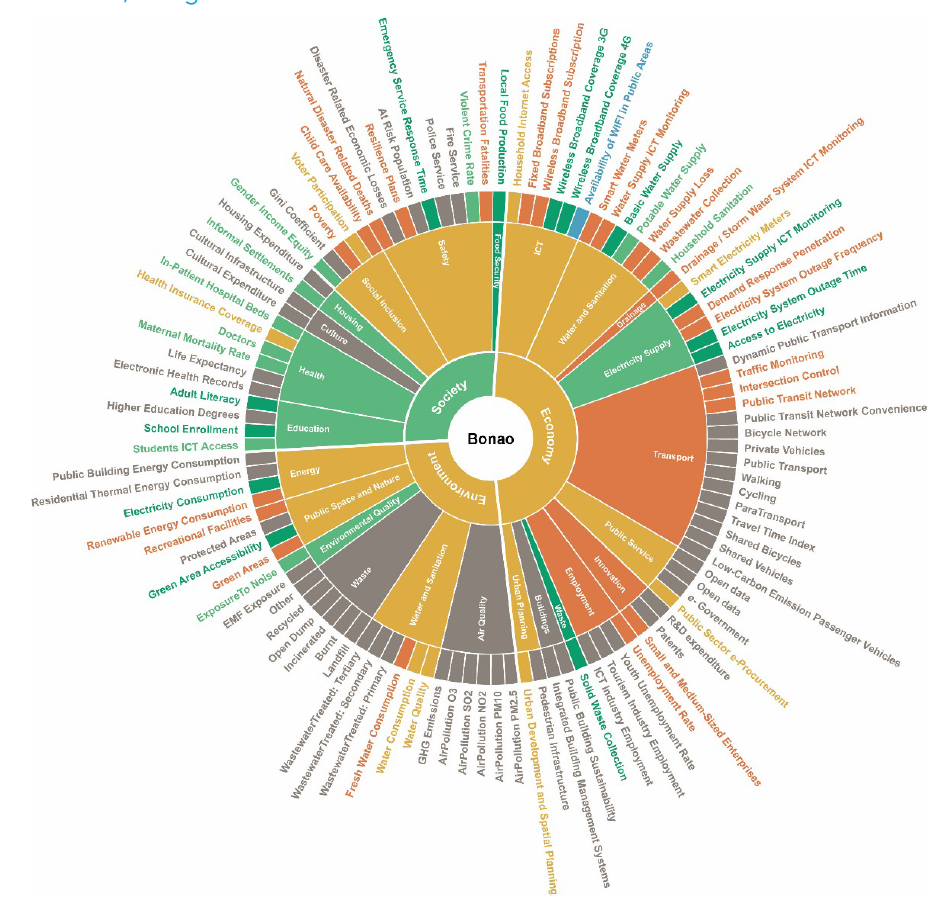
U4SSC Key
Performance Indicators (KPIs) help cities measure
performance and identify priorities for action. Based on Recommendation
ITU-T Y.4903 and aligned with the UN-Habitat Global Urban Monitoring
Framework, U4SSC KPIs have been implemented in more than 350 cities
worldwide. The results help cities identify gaps, guide investment and
track improvements over time.
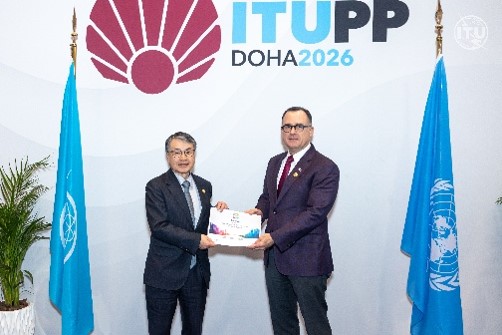
Anyang (Republic of
Korea) and Bonao (Dominican Republic) received certificates from ITU
and UN-Habitat for successfully implementing the U4SSC KPIs. Baghdad
(Iraq) is also moving towards implementation: ITU, the City of Baghdad
and ICC Iraq signed a cooperation agreement to bring U4SSC KPIs to the
city.
|
|
|
ITU also recognized
the Dominican Telecommunications Institute (INDOTEL) as the first
telecommunications regulator worldwide to actively promote the
implementation of the U4SSC KPIs, supporting their adoption in Bonao
and San Pedro de Macorís (Dominican Republic). This pioneering
initiative highlights the strategic role telecommunications regulators
can play in advancing smart sustainable cities. ITU encourages
regulators worldwide to follow INDOTEL’s example and promote the
implementation of the U4SSC KPIs in their respective countries.
Read the U4SSC KPI Brochure here.
|
Coming up: U4SSC
Annual Meeting
The next U4SSC Annual
Meeting will take place virtually on 17 December 2026, bringing the
initiative's community together to continue advancing smart sustainable
cities. You can find more information here.
AI, Digital Twins and the Citiverse: Shaping the Future of
People-Centred Cities
|
From Vision to Action: Advancing the
Global AI & Citiverse Initiative
|
|
How can cities
connect AI, digital twins and citiverse across services? At SCEWC 2026
in Barcelona, the Discovering the
Citiverse – Global Initiative on AI, Digital Twins and Virtual Worlds shared
progress towards open, trusted and interoperable urban
ecosystems. Launched by ITU, UNICC and Digital Dubai, with more
than 70 international partners, the Initiative unites cities,
governments, industry, academia and international organizations to
build open, trusted and interoperable ecosystems connecting physical
and virtual urban environments.
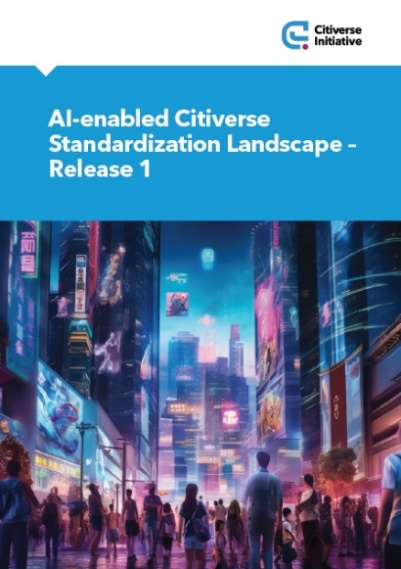
A key milestone was
the launch of the AI-enabled Citiverse Standardization Landscape – Release
1, developed by ITU, the European Commission, UNICC and
Open & Agile Smart Cities (OASC). The Landscape helps cities,
technology providers and policymakers navigate standards for connected
digital ecosystems. It also guides further international standardization
to reduce fragmentation and technological lock-in. Read the Landscape here.
|
Strengthening International Collaboration:
ITU, the European Commission and OASC Join Forces on Interoperable Cities
Interoperability is
essential if AI-enabled cities are to move beyond isolated pilots and
deliver solutions that work across systems, sectors and borders. This was
a central message of two sessions co-organized by ITU, European
Commission, OASC and UNICC at the United Nations Pavilion and one joint
session at the European Twinning & Citiverse Plaza Pavilion.
The discussions
connected international standardization with European initiatives on
local digital twins, data spaces and open urban ecosystems. By aligning
technical approaches, ITU and its partners are helping cities securely
connect data, infrastructure and AI-powered services, reduce
fragmentation and replicate effective solutions, building the foundations
for a citiverse that delivers practical benefits for people.
COP31: Putting AI and Digital Innovation at the Heart of
Urban Climate Action
|
From Dialogue to Action: A Global Call
for Smarter, More Resilient Cities
A key outcome was the
endorsement of the COP31 Global Call to Action for Smart, Resilient and
Sustainable Cities powered by AI, Digital Twins and IoT.
The Call promotes the deployment of interoperable AI, digital twins and
IoT solutions to advance climate goals, while emphasizing the importance
of translating commitments into measurable results through the U4SSC Key
Performance Indicators, aligned with the UN-Habitat Urban Monitoring
Framework.
From Tampere to Manchester: Help Shape AI for Cities
|
Next Stop: Manchester (8-10
December 2026)
Building on the
success of the COP31 High-Level Dialogue in Antalya and the momentum
generated by the COP31 Global Call to Action on Cities, the conversation
continues in Manchester, United Kingdom, on 8–10 December 2026. The Forum “AI for Cities: Interoperable Solutions for
Climate-Resilient, People-Centred Cities”,
taking place on 8 December, will explore how cities can move from AI
pilots to citywide impact, leveraging international standards, Minimum
Interoperability Mechanisms (MIMs), digital twins and the UN
People-Centred AI Toolbox. The Forum will be followed by the second FG-AI4SSC meeting on 9–10 December.
City leaders, governments, industry, academia and technical experts are
invited to share practical experiences, identify standardization needs
and shape the next generation of AI-enabled, climate-resilient and
inclusive cities.
Deadline for written contributions: 26
November 2026.
Register and explore
the programme here.
|
|
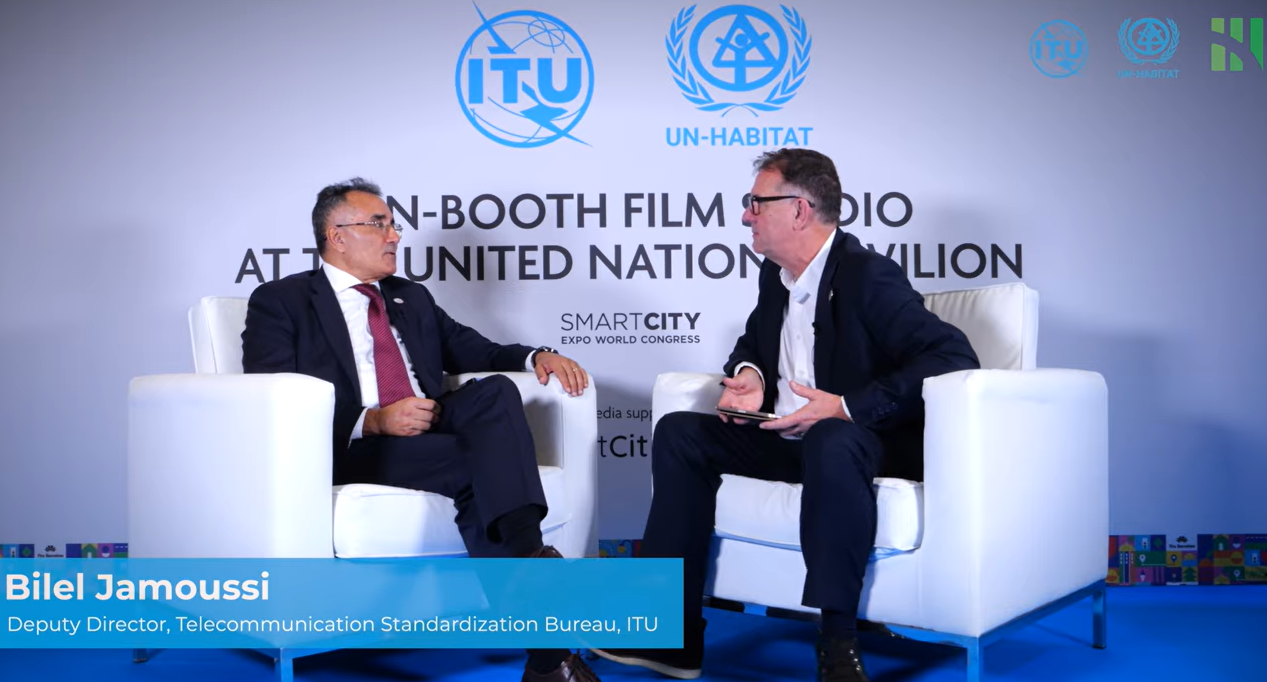
How do standards
help cities get more from AI, digital twins and IoT? Dr Bilel
Jamoussi shares his perspective on interoperability, better decisions
and people-centred urban development.
Watch the
interview here.
|
|
|
Resources for Your City: Plan, Build, Deploy and Measure
|
|
|
PLAN
Guiding Principles
and Frameworks for People-Centred Smart Cities in the AI era
This report, co-led
by ITU and UN-Habitat, is the first release of the U4SSC Toolbox for
People-Centred Smart Cities in the AI Era. It helps cities translate
people’s needs into responsible digital action through guiding
principles, an eight-step implementation cycle, risk-based AI
safeguards, measurement tools and practical templates.
Read it here.
|
|
|
PLAN
An Urban Foresight
Framework for Anticipatory Governance
This report presents
a practical framework to help cities prepare for uncertainty and make
better long-term decisions. Bringing together horizon scanning,
scenario development and policy testing, it shows how to embed
foresight in urban planning, budgeting and institutional processes,
with approaches adaptable to different city sizes and capacities.
Read it here.
|
|
|
PLAN
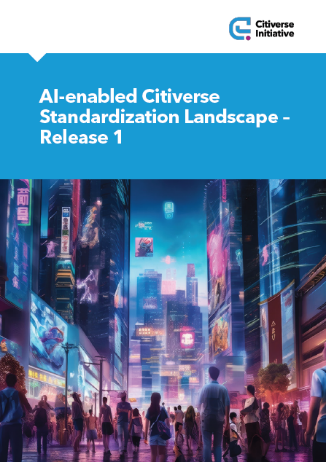
AI-enabled Citiverse
Standardization Landscape – Release 1
This report,
developed by ITU, the European Commission, UNICC and OASC, maps the
standards shaping the convergence of AI, digital twins and virtual
worlds in cities. Covering 201 inventory entries and identifying 36
standardization gaps, it helps policymakers, cities, industry and
standards experts navigate priorities for interoperability, security
and responsible adoption in the AI-enabled citiverse.
Read it here.
|
|
|
BUILD
Trust at City Scale:
Securing Digital Public Infrastructure in Smart Sustainable Cities
This report provides
a city-scale security framework for protecting the digital public
infrastructure underpinning essential urban services. It helps cities
identify risks and embed safeguards throughout the infrastructure
lifecycle, addressing cybersecurity, emerging AI and quantum threats,
and residents’ continued access to services.
Read it here.
|
|

|
BUILD
Connecting Smart
City Platforms and Data Spaces: The strategic Role of Data Offices
This report explains
how city platforms, data spaces and data offices can help turn
fragmented urban data into shared public value. It offers guidance on
organizational responsibilities, interoperability and trusted data
sharing that cities can adapt to their resources and institutional
context.
Read it here.
|
|
|
DEPLOY
An urban federated
agentic AI framework
This report presents
a framework for connecting AI agents across city departments and
partner organizations. It sets out shared rules, a layered architecture
and illustrative scenarios for responsible cooperation, enabling
organizations to coordinate services while retaining control of their
systems, data and responsibilities.
Read it here.
|
|
|
DEPLOY
Good practices for
city AI agents
This report helps
city leaders assess where AI agents can deliver public value and how to
deploy them responsibly. It presents four risk tiers, 18 areas of good
practice and practical templates covering accountability, human
oversight, procurement, cybersecurity and inclusion, supporting
services that remain answerable to people.
Read it here.
|
|
|
DEPLOY
Smart tourism in
action: How cities are managing destinations with data
This report
showcases how destinations worldwide are using data and digital
platforms to manage tourism more effectively. Through practical
examples, it explores approaches to managing visitor flows, supporting
local businesses and improving visitor experiences while advancing
sustainability and residents’ wellbeing.
Read it here.
|
|
|
DEPLOY
Building smart
destination platforms: A guide for governments and cities
This report helps
governments and cities develop smart destination platforms that connect
tourism data, services and stakeholders. With guidance on institutional
coordination, interoperability and phased implementation, it supports
better destination management, improved visitor experiences and greater
benefits for residents and local communities.
Read it here.
|
|
|
MEASURE
U4SSC Key
Performance Indicators Brochure
This brochure helps
cities get started with the U4SSC Key Performance Indicators, based on
ITU standard Y.4903, explaining how to join, collect data and complete
an assessment. It shows how cities can use their results to identify
gaps, prioritize action and guide investments, while supporting
UN-Habitat’s Urban Monitoring Framework through aligned indicators.
Read it here.
|
|
|
MEASURE
AI-Driven Urban Key
Performance Indicators (KPIs)
This report explores
how artificial intelligence and non-traditional data can make urban
performance measurement more timely, detailed and useful. Drawing on
practical examples, it offers a maturity model, implementation roadmap
and safeguards to help cities complement established indicator
frameworks while protecting privacy, fairness and data quality.
Read it here.
|
|
|
MEASURE
Digital
Transformation Assessment of People-Centred Cities Performance and
Impact Assessment Guide
This report helps
cities assess whether digital transformation is improving people’s
lives. Combining a three-stage indicator framework with a broader
performance and impact assessment methodology, it supports cities in
assessing capabilities, use and outcomes, identifying priorities and
guiding improvements according to local needs and digital maturity.
Read it here.
|
|
|
MEASURE
Details of 100 Key
Performance Indicators
This companion
report details 100 indicators supporting the Digital Transformation
Assessment of People-Centred Cities Performance and Impact Assessment
Guide. Definitions, calculation methods, interpretation guidance and
suggested data sources help cities assess digital capabilities, service
use and outcomes for people.
Read it here.
|
|

|
LEARN FROM CITIES
City Snapshot and
Verification Report – Bonao, Dominican Republic
How can better data
help your city set priorities and guide investment? Explore Bonao’s
experience with the U4SSC Key Performance Indicators (KPIs). The City
Snapshot visualizes its performance, while the Verification Report
examines the quality and conformity of the submitted data.
Based on
Recommendation ITU-T Y.4903, the assessment offers a practical starting
point for cities seeking to identify gaps, target action and track
progress towards the Sustainable Development Goals.
City Snapshot | Verification Report
|
|

|
LEARN FROM CITIES
City Snapshot and
Verification Report – San Pedro de Macorís, Dominican Republic
Explore San Pedro de
Macorís’s experience with the U4SSC Key Performance Indicators (KPIs).
The City Snapshot visualizes its performance, while the Verification
Report examines the quality and conformity of the submitted data.
City Snapshot | Verification Report
|
|