|
|
Digital Transformation and
Cities Digest
2025 Year in Review
|
|
|
Message from Seizo Onoe,
Director,
Telecommunication
Standardization Bureau, ITU
|
|
Dear Colleagues,
Welcome to the latest edition of
the Digital Transformation and Cities Digest.
As we approach the end of 2025,
this issue offers a moment to reflect on the remarkable progress made
across digital transformation, smart sustainable cities and virtual
worlds. This year has shown once again how collective efforts can move
global urban development forward.
Across all our work, we are
guided by a shared commitment to ensure that technologies truly
benefit people. This principle has shaped our collaborations, inspired
innovation and anchored our collective efforts. My sincere thanks to
all who contributed to this mission throughout the year.
I hope you enjoy this edition of
the Digest. As we look toward 2026, I invite you to continue this
journey with us toward a digital future that remains human-centred,
inclusive and sustainable.
I wish you a productive end to
2025 and a bright year ahead. If you have any comments on this digest
or suggestions for improvement, please send an email to digitaltransformation@itu.int.
Sincerely,
|

|
Seizo
Onoe,
Director,
Telecommunication Standardization Bureau, ITU
|
|
|
Advancing sustainable urban development: Strengthening
collaboration between ITU and UN-Habitat
|
|

Video
message from ITU Secretary-General and UN-Habitat Executive Director
|
Cities are becoming
laboratories for emerging technologies from AI to the citiverse,
reshaping how urban services are designed, delivered and governed. In
2025, ITU and UN-Habitat strengthened our collaboration even further
in support of this transformation.
In 2025, ITU and UN-Habitat
reinforced our collaboration through a Memorandum
of Understanding (MoU)
to deepen cooperation on people-centred smart cities, urban data and
sustainable urban development, advancing our shared commitment to
inclusive, resilient and sustainable cities and communities.
|
One of the pillars of this
partnership is the United
for Smart Sustainable Cities (U4SSC)
initiative. Backed by 20 UN agencies, U4SSC serves as an international
platform for policymakers, city leaders, and urban practitioners to
exchange knowledge, co-create solutions, and accelerate progress toward
the Sustainable Development Goals (SDGs), while supporting the
implementation of the Pact for the Future and its Global Digital
Compact.
To support cities, U4SSC thematic groups create
expert communities to co-create frameworks, guidelines, tools and
policy guidance. Active groups include:
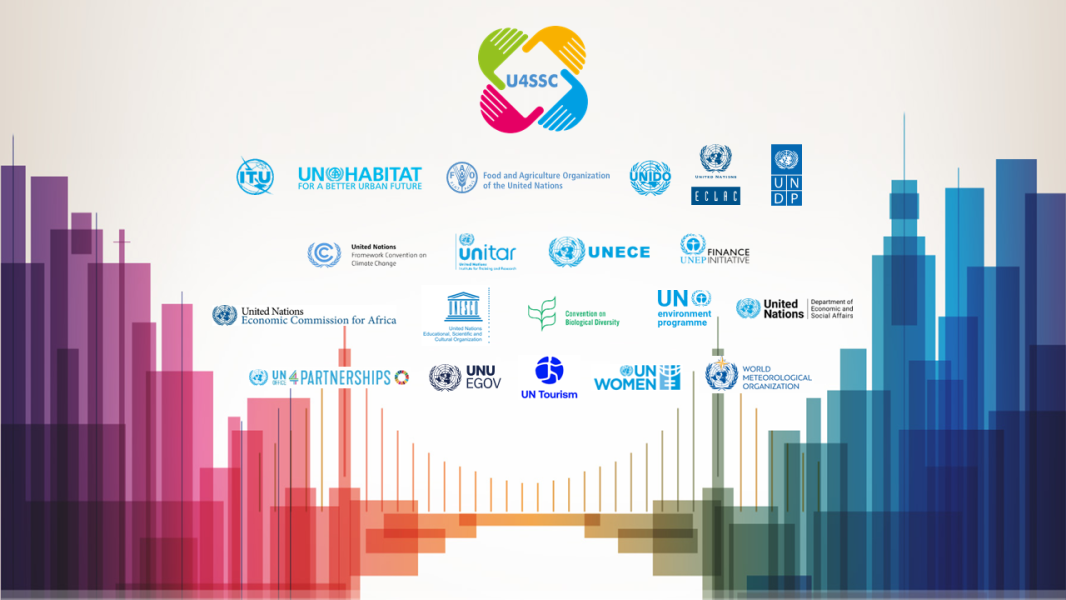
These groups host specialized working groups
with active practitioners shaping cities' futures. This year saw the
launch of several new working groups, including:
- WG5: Agentic AI for Cities (under Artificial Intelligence in
Cities): Exploring how autonomous AI agents and
multi-agent systems can accelerate urban digital transformation
through toolboxes, governance models, and deployment frameworks.
- WG6: Digital Development Goals (under Digital Transformation for
People-Centred Cities): Developing a global framework
to advance and measure SDG progress through inclusive and
sustainable digital transformation.
- WG8: Integrated Urban, Land, and Housing Data
Framework (under City Platforms and Data
Spaces): Designing guidelines integrating data across
land, housing and urban development to enable transparency,
accountability and evidence-based policymaking.
Whether you are a policymaker,
engineer, urban planner, researcher or simply passionate about
sustainable cities, there is a place for you in our global community.
We invite you to join the U4SSC working groups and contribute to
shaping a people-centred digital future for cities. To get involved,
please contact u4ssc@itu.int.
|
|
Smart sustainable cities in action: Highlights from the
Smart City Expo World Congress 2025
|
|
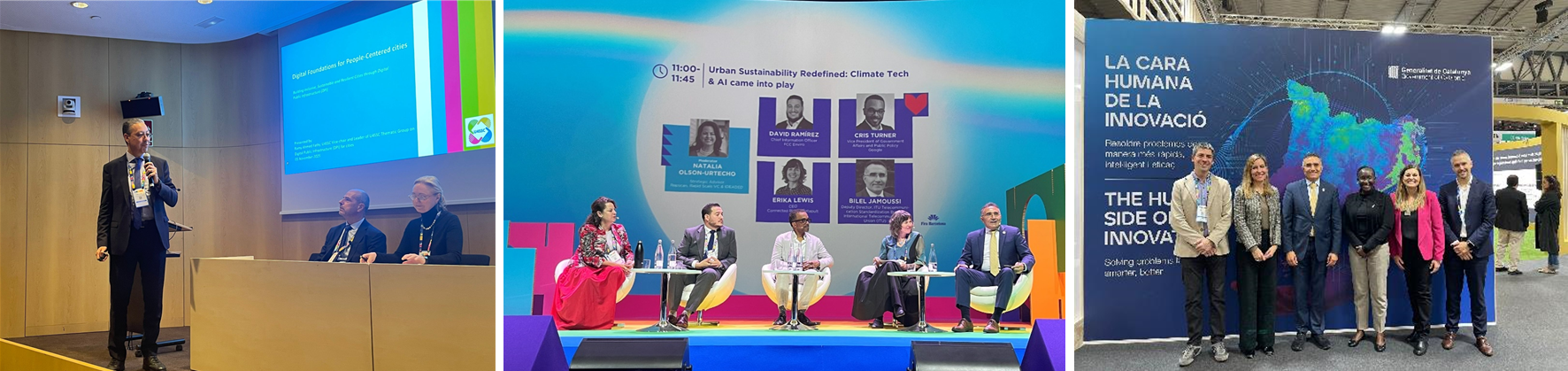
Cities are where ideas meet
actions and this year’s Smart
City Expo World Congress once again demonstrated the
power of global collaboration. The ITU team joined city leaders,
innovators and partners in Barcelona to exchange insights on the future
of our cities.
ITU hosted 2 sessions
that showcased how digital transformation, virtual worlds and emerging
technologies are reshaping the way cities serve their residents.
Special session on
U4SSC(Barcelona, 5 November 2025)
This session reflected
on emerging trends shaping cities and participants learned how local
leaders and stakeholders are translating visionary ideas into concrete
actions.
A highlight of the session was
the launch of 2
new U4SSC deliverables with practical guidance to
advance inclusive, sustainable and human-centred urban development:
Session on
citiverse rising: Virtual worlds and AI agents for urban transformation
(Barcelona, 4 November 2025)
This session explored
how virtual worlds and federated AI agents are transforming the way
cities are designed, governed and experienced. The discussion made one
thing clear: the citiverse is not just an emerging concept, but a
strategic frontier with significant potential to improve social,
economic and environmental sustainability.
Beyond the sessions, ITU's team
participated in diverse activities and meetings across the Congress. City leaders appreciated ITU’s
work and encouraged deeper collaboration. These
exchanges reaffirmed the global momentum toward smart, sustainable and
inclusive cities.
|
|
Reimagining cities: Global DPI Summit 2025
|
|
Digital public infrastructure
(DPI) has emerged as a transformative force for delivering inclusive,
efficient and people-centred urban services.
At the Global DPI Summit 2025 on
4 November, ITU organized a session on Cities
Reimagined: DPI as the Engine of Urban Progress. Drawing
on case studies from the U4SSC Initiative, the session showcased how
digital public infrastructure empowers cities to improve service
delivery, strengthen resilience and support community needs.
We also introduced the new U4SSC
deliverable Building
Digital Public Infrastructure for Cities and Communities, developed
under the thematic
group on Digital Public Infrastructure (DPI) for Cities.
This thematic group focuses on
the technical requirements of DPI for cities to enable digital
transformation at scale in an inclusive and safe environment. With five
active working groups, we encourage you to follow ongoing work and
contribute to shaping the future of DPI for cities.
|
|
A new era for AI-powered virtual worlds in cities: 1st
Citiverse Assembly and launch of the Citiverse Alliance
|
|
The 1st
Citiverse Assembly,
held on 3 November 2025 and hosted by the City of Valencia, marked a n
important milestone for the Global
Initiative on Virtual Worlds and AI – Discovering the Citiverse. Launched
by ITU, UNICC, and Digital Dubai, and now supported by more than 70
partners, the initiative is a global multistakeholder platform that
aims to shape a future where AI-powered virtual worlds are inclusive,
trusted and interoperable.
During the Assembly, seven new
practicle deliverables to support city implementation were released,
including:
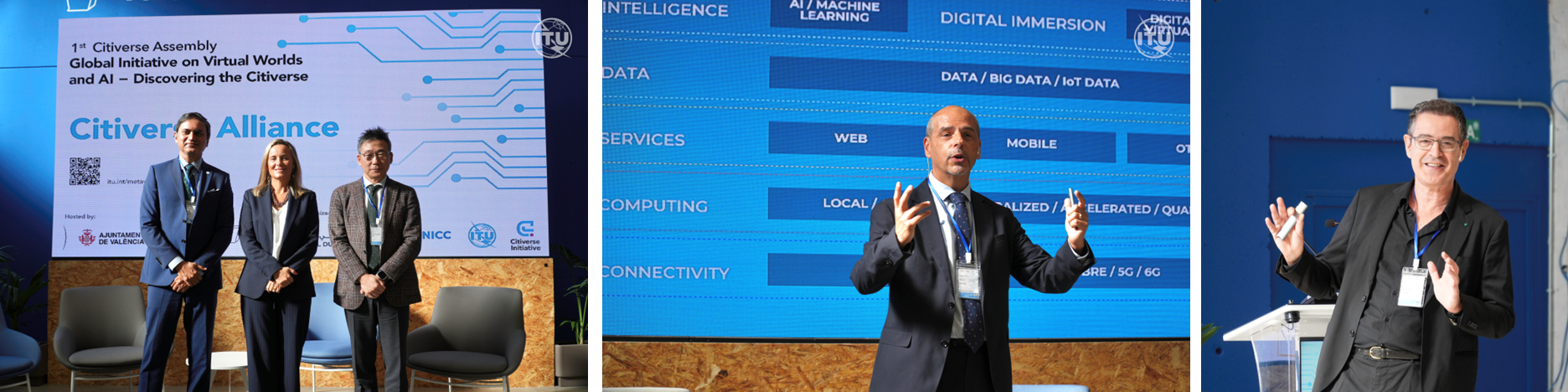
The Assembly also marked the
official launch of the Citiverse
Alliance,
a new platform for cities and their communities to collaborate,
identify shared priorities, and co-develop immersive solutions for
public services, governance, and digital economies. The Alliance aims
to accelerate real-world deployment through peer learning, capacity
building and sahred eperimentation.
Cities and partners interested
in participating or learning more about the Citiverse Alliance are
warmly invited to contact virtualworlds@itu.int
|
|
Hear from inspiring voices: the 1st UN Citiverse Challenge
|
|
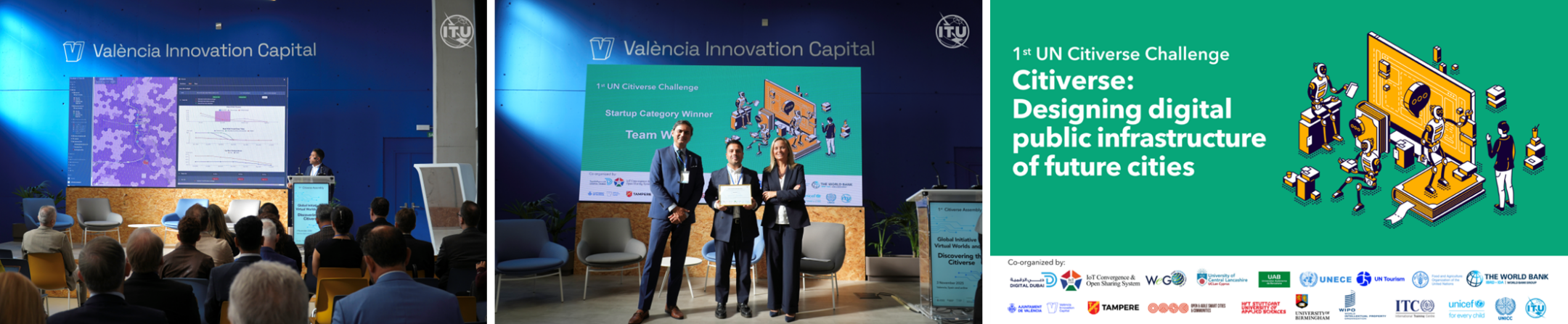
Together with 18 global
partners, we have launched and concluded the 1st
UN Citiverse Challenge.
Students and startups worldwide were invited to design innovative
solutions that leverage the Citiverse and DPI to address pressing
global challenges.
While Team DataLab was awarded
the Student Category prize in June, the Startup Category winner, Team WEO,
received an award during the Citiverse Assembly for their pioneering
work in advancing urban
resilience and adaptation through a digital twin
solution. Congratulations to the team!
|
|
Publication spotlight
|
|

|
A guide to digital wellbeing
The guide examines how digital
technologies can both enrich and challenge our wellbeing. It offers a
structured framework to help cities and communities balance digital
opportunities with risks like mental strain, overexposure and
misinformation.
The guide is complemented by
the following case studies:
Read it here.
|
|
|
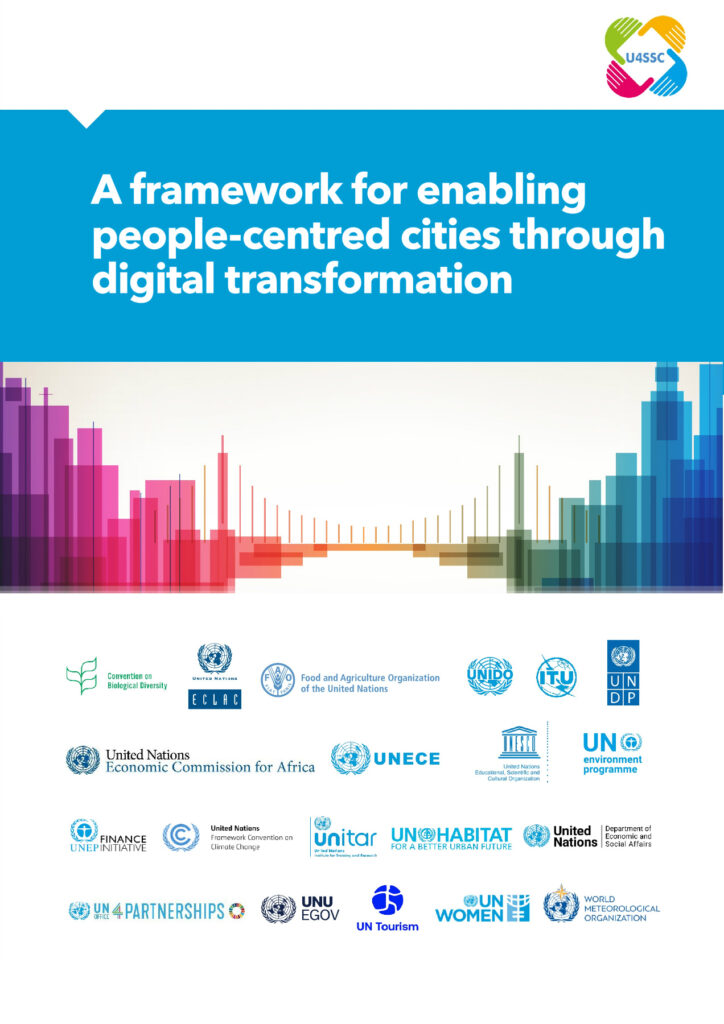
A framework for enabling
people-centred cities through digital transformation
This framework provides a
holistic roadmap for cities to embed digital transformation in ways
that are inclusive, fair and resilient. It outlines actionable policy
levers, governance models and engagement strategies to integrate
digital solutions across urban systems, while addressing challenges
such as the digital divide, privacy, interoperability and
environmental impacts.
Read it here.
|
|
|
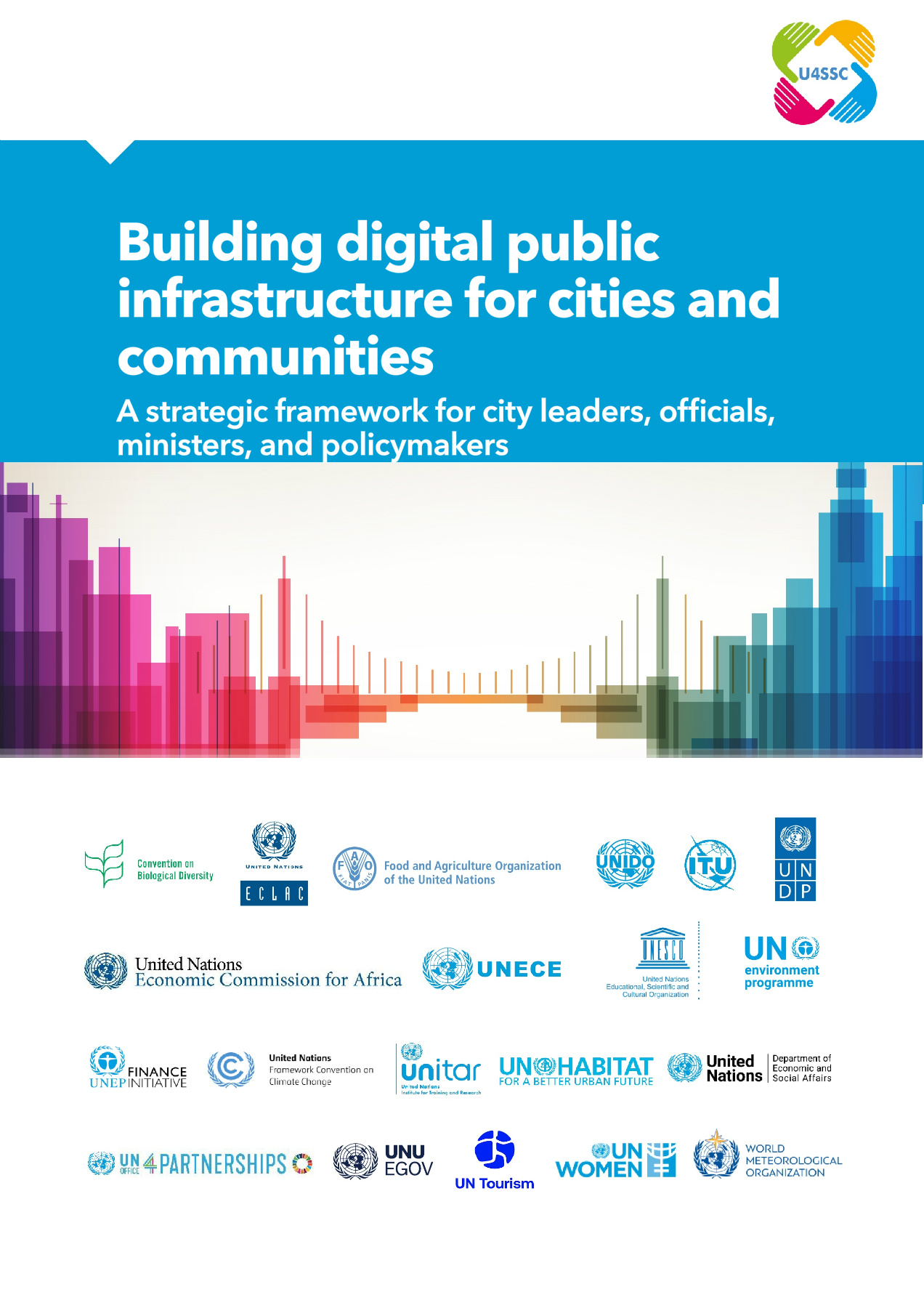
Building digital public
infrastructure for cities and communities
This report highlights how
interoperable systems can help cities become more inclusive,
resilient and citizen-centric. It highlights best practices and
global examples to underscore the importance of scalable, secure and
well-governed DPI to bridge digital divides, improve urban service
delivery and advance the SDGs.
Read it here.
|
|
|
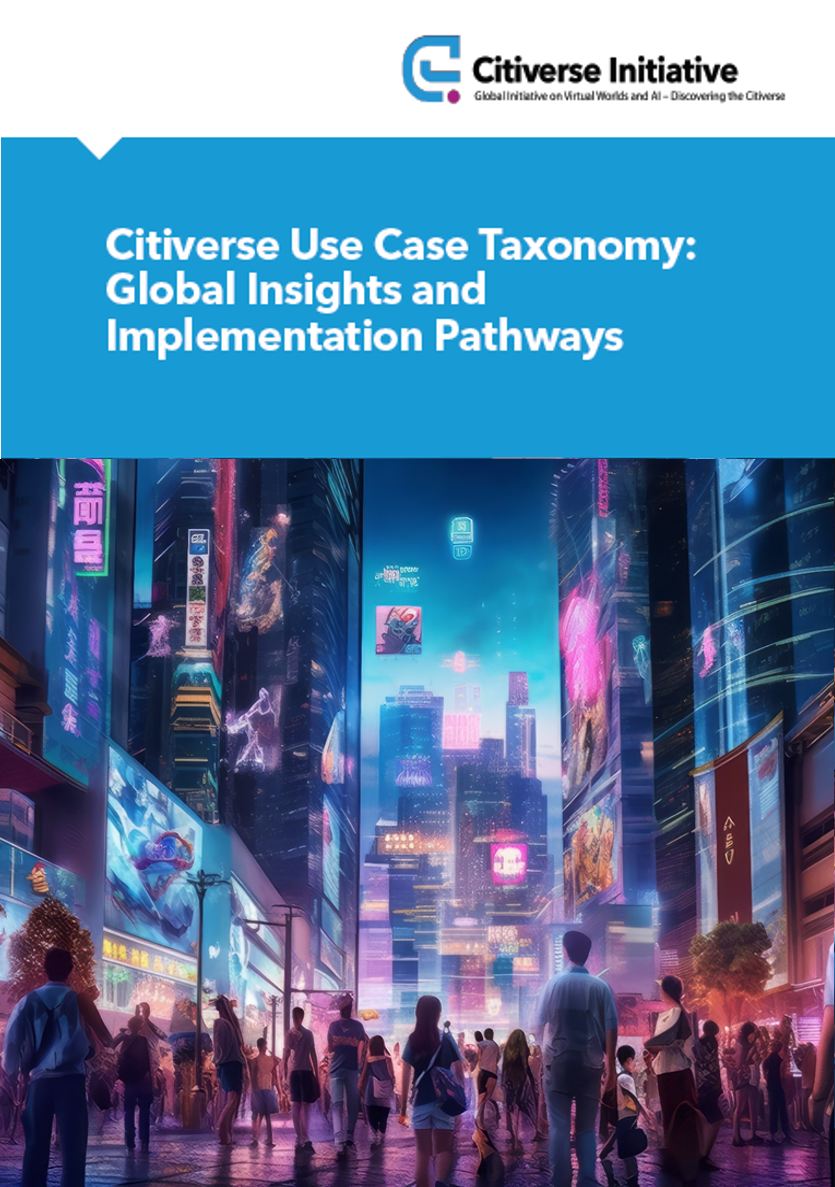
Citiverse use case taxonomy
This series of reports
presents a comprehensive reference for policymakers, industry
leaders, city officials and other stakeholders on the opportunities
and pathways for Citiverse implementation. Reports include:
|
|
|
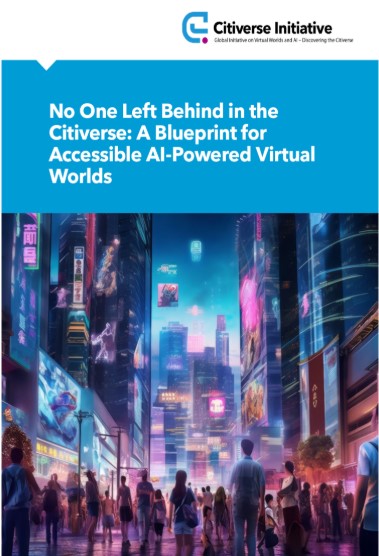
No one left behind in the
citiverse: A blueprint for accessible AI-powered virtual worlds
This report highlights the
urgent need to embed accessibility and inclusion at the core of
digital transformation. It offers practical guidance, models and use
cases to ensure that AI-powered virtual environments are universally
accessible and supportive of equitable participation.
Read it here.
|
|
|
|
|
|
|