|
Third Meeting for WSIS Action
Line C5:
Building Confidence and Security in the Use of ICTs
Speakers
|
| |
|
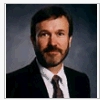
Salma
Abbasi |
|
 Salma
Abbasi has 27 years of experience in the
field of technology and business process
reengineering. She has been working in
Silicon Valley since 1981 initially in the
capacity of a design engineer and later
holding a series of Executive Management
positions in multiple fields. Salma
Abbasi has 27 years of experience in the
field of technology and business process
reengineering. She has been working in
Silicon Valley since 1981 initially in the
capacity of a design engineer and later
holding a series of Executive Management
positions in multiple fields.
Salma has been working as a senior
consultant in the field of security. She has
worked with governments to assess the
vulnerabilities and threats to design
multidimensional holistic strategies and
policies. Additionally she has designed
integrated security solutions at city level
to address the threats of terrorism for
multiple projects. Salma has also worked for
designing state of the art integrated
strategies for technology transformation.
She has also designed a number of state of
the art holistic security strategies for the
Financial, Telecommunication, Oil and Gas
and Public sectors and Intelligent Building
complexes.
As the President of the e-World Wide Group,
Salma is using her experience and contacts
to leverage best practices to help promote
business and technology development all over
the developing countries to bridge the
digital divide and gender divide in a
practical manner to help improve the
“Quality of life” for marginalized people
all over the region. She is also working
with the UNDP, UNIDO, & UNESCO to providing
workshops and consulting services to assist
organizations to design and build “Effective
‘e’ Strategies” focusing on multiple areas
to support the MDG’s: commerce, education,
healthcare, human resource development (HRD),
Human Rights and Gender Empowerment in
countries such as Pakistan, Sri Lanka,
Bangladesh, Iran, UAE, Malaysia, Oman,
Uganda and Nigeria. She is also actively
linking ICT companies in the region with
International corporations and organizations
in the developed countries to promote
exports and sustainable growth for the local
SME’s in the developing countries. |
|
|
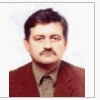
Artem ADZHEMOV
Rector Moscow
Technical University of Communications
Russian Federation |
|
 Artem
Adzhemov has over 70 academic and
scientific-methodical works, including
authors certificates in the field of
telecommunications theory and
infocommunications technologies application.
In 1994 A. Adzhemov defended Doctor of
Science thesis and in 1997 received the
title of professor: A. Adzhemov is the
member of communication various Academies:
International Academy of Informatization,
International Telecommunications Academy and
International Peoples Academy of Public
Education, so as the member of number of
Counsels and Commissions of the Ministry of
Informatization Technologies and
Communications and the Ministry of
Educations and Science. A. Adzhemov was the
coordinator the projects of the
International Telecommunications Union. The
scientific laboratory, headed by A. Adzhemov,
is successfully acting in the field of
information technologies, participating in
Russian and foreign exhibitions (Swiss,
Germany, South-African Republic, etc.) A.
Adzhemov is one of the initiators and
leading specialists, using
infocommunications technologies in
education. He is one of the active members
of the projects, concerning the development
and formation of the new information
services: e-learning and e-medicine as well
as the problems of cyber security. A.
Adzhemov has the title «Master of
Communication»; awarded by State Prizes:
Medal “In the memory of 850 Anniversary of
Moscow“ RF Government Prize in the field of
education, the title “Honored Communication
Worker of RF”. Artem
Adzhemov has over 70 academic and
scientific-methodical works, including
authors certificates in the field of
telecommunications theory and
infocommunications technologies application.
In 1994 A. Adzhemov defended Doctor of
Science thesis and in 1997 received the
title of professor: A. Adzhemov is the
member of communication various Academies:
International Academy of Informatization,
International Telecommunications Academy and
International Peoples Academy of Public
Education, so as the member of number of
Counsels and Commissions of the Ministry of
Informatization Technologies and
Communications and the Ministry of
Educations and Science. A. Adzhemov was the
coordinator the projects of the
International Telecommunications Union. The
scientific laboratory, headed by A. Adzhemov,
is successfully acting in the field of
information technologies, participating in
Russian and foreign exhibitions (Swiss,
Germany, South-African Republic, etc.) A.
Adzhemov is one of the initiators and
leading specialists, using
infocommunications technologies in
education. He is one of the active members
of the projects, concerning the development
and formation of the new information
services: e-learning and e-medicine as well
as the problems of cyber security. A.
Adzhemov has the title «Master of
Communication»; awarded by State Prizes:
Medal “In the memory of 850 Anniversary of
Moscow“ RF Government Prize in the field of
education, the title “Honored Communication
Worker of RF”.
|
|
|
Manuel
Pedrosa de Barros |
|
 Manuel
Pedrosa de Barros is Director of
Communications Security Office,
ANACOM: Manuel
Pedrosa de Barros is Director of
Communications Security Office,
ANACOM:
His mission is to ensure the
execution of ANACOM’s powers and
responsibilities with regard to
the security of communications
networks and services, namely
the access to emergency
services, as well as to plan and
to implement an internal
security policy and the
coordination of communications
standardisation.
|
|
|
Henrique
Faulhaber
Board Member , Brazilian Internet
Steering Comittee |
|
 Henrique
Faulhaber was ellected to represent the IT
industry on the Brazilian Internet Steering
Comittee. He is a director of Calandra
Soluções, a Brazilian IT company specialized
in Information Management and Corporate
Intelligence. He is also a Board Member of
Riosoft , an association of software
companies from Rio de Janeiro, and director
of Seprorj ( Rio de Janeiro 's Infomation
Technology Companies Syndicate) . He has a
degree in Mathematics, and a MSc title in
System Engineering. His professional
background is in Marketing , Network
infrastructre, Application Development,
Information Management and Network security. Henrique
Faulhaber was ellected to represent the IT
industry on the Brazilian Internet Steering
Comittee. He is a director of Calandra
Soluções, a Brazilian IT company specialized
in Information Management and Corporate
Intelligence. He is also a Board Member of
Riosoft , an association of software
companies from Rio de Janeiro, and director
of Seprorj ( Rio de Janeiro 's Infomation
Technology Companies Syndicate) . He has a
degree in Mathematics, and a MSc title in
System Engineering. His professional
background is in Marketing , Network
infrastructre, Application Development,
Information Management and Network security.
Henrique Faulhaber has been an entreprenier
since 1985, being involved in Internet
business in Brazil since the begining.
Henque has been board member of CGI.br since
2004 and is coordinator of two task forces
in Brazilian Internet Steering Comittee :
Antispam Working Group , and Digiital
Content Iniciative Working Group.
Mr Faulhaber has several articles and
columns published in Brasilians newspapers
and trade publications. He also makes
several presentations at seminars,
congresses and trade shows.
|
|
|
Marco GERCKE Senior Researcher University of Cologne
Germany |
|
Dr. Marco Gercke is teaching
Criminal Law with a focus on
Cybercrime at the Faculty of
Law, University of Cologne
(Germany) and is visiting
lecturer for International
Criminal Law at the University
of Macau (Macau). Marco is a
frequent national and
international speaker and author
regarding Cybercrime and works
as expert for different
International Organisation like
the Council of Europe and the
ITU. His latest researches
covered the Challenges of
Fighting Cybercrime,
International Harmonisation
Approaches in the Fight against
Cybercrime, Identity Theft and
Terrorist Activities in the
Internet.
|
|
|
Misha
Glenny |
|
Misha
Glenny (born 1958) is a British journalist
and specialist on Southeastern Europe. He
was educated at an independent school,
Magdalen College School, in Oxford, and
studied at Bristol University and Prague's
Charles University before becoming Central
Europe correspondent for the The Guardian
and later the BBC.
He specialised in reporting on the Balkans
independence wars in the late 1980s and
early 1990s that followed the collapse of
Yugoslavia. While at the BBC, Glenny won
1993's Sony Gold Award for his 'outstanding
contribution to broadcasting'. He has also
written three books about Central and
Eastern Europe. His latest book is about
international organised crime, which, he
writes, may now account for 20 per cent of
the world's GDP.
The son of the academic Michael Glenny, he
had advised the US and some European
governments on policy issues and for three
years ran an NGO helping with the
reconstruction of Serbia, Macedonia and
Kosovo. He is married to the journalist and
broadcaster Kirsty Lang and has three
children, Miljan and Sasha Glenny (from his
first marriage), and Callum Lang. |
|
|
Tom Ilube |
|
 Tom
Ilube is Chief Executive Officer
of Garlik (www.garlik.com), a
new consumer company pioneering
a range of services to help give
people real power over their
personal information in the
digital world, using semantic
web technologies. Tom
Ilube is Chief Executive Officer
of Garlik (www.garlik.com), a
new consumer company pioneering
a range of services to help give
people real power over their
personal information in the
digital world, using semantic
web technologies.
Until recently Tom Ilube was
Chief Information Officer of the
world's largest pure online
bank, Egg plc and a member of
the Executive Committee. In 2005
Tom left Egg plc to found Garlik,
in partnership with Mike Harris,
the Founding CEO of Egg plc and
Professor Nigel Shadbolt of
Southampton University.
Egg plc was launched in 1998 and
Tom was the original Launch
Programme Manager. Today Egg is
one of the worlds largest and
most innovative online banks
with over 4 million customers.
Prior to this role, Tom was
Chief Executive of Lost Wax for
six years, a software company
that he founded in 1996. The
company was recognised as one of
the UK's most innovative
technology firms, being listed
as a top technology firm by The
Sunday Times, Computing
Magazine, Real Business and
others.
Tom's technology career spans 20
years with a range of blue chip
organisations including Goldman
Sachs, PriceWaterhouseCoopers,
The London Stock Exchange, Cap
Gemini and British Airways.
Garlik was selected as 2008
Technology Pioneer by the World
Economic Forum, Davos. |
|
|
Fredesvinda Insa |
|
 Dr
Fredesvinda Insa graduated in
Law at the University of
Barcelona and holds a PhD on
Information Sciences and
Communications at University
Complutense, Madrid. She led the
AEEC project and currently is
the Strategic Development
Manager of Cybex, working
together with the Unit of
Technological Investigation
(Spanish National Police), the
General Council of the Judiciary
and several European and Spanish
Ministries and corporations on
computer forensics and
electronic evidence. Ms Insa
previously worked as a lawyer
for Price Waterhouse in
Brussels, and lectured at the
University of Barcelona. Dr
Fredesvinda Insa graduated in
Law at the University of
Barcelona and holds a PhD on
Information Sciences and
Communications at University
Complutense, Madrid. She led the
AEEC project and currently is
the Strategic Development
Manager of Cybex, working
together with the Unit of
Technological Investigation
(Spanish National Police), the
General Council of the Judiciary
and several European and Spanish
Ministries and corporations on
computer forensics and
electronic evidence. Ms Insa
previously worked as a lawyer
for Price Waterhouse in
Brussels, and lectured at the
University of Barcelona.
|
|
|
Adrian Mc. CULLAGH
Professor Information
Security Institute
Australia |
|
 Admitted to practice law in
1988, Adrian primarily practices
law in Data Security and
Compliance, IT Governance,
Telecommunications, Intellectual
Property law and Electronic
Commerce Law. He has degrees in
Computer Science, Law (Honours)
and a Ph. D in IT Security. He
is also a graduate of the
Australian Institute of Company
Directors. His Ph.D. was an
investigation into digital
signature technology and whether
it is legally possible for there
to exist an electronic signature
that is legally and functionally
equivalent to a hand written
signature as found in the paper
based environment. His research
interests include: Data
security, Public Key
Infrastructure, Data
classification schemes, Policy
issues concerning information
security, IT Governance,
Corporate Governance and the
Theory of Property. Adrian is
also finishing his second Ph.D.
in law, which is an
investigation into the “Legal
Recognition of Avatars: legal
Property or just a Commodity”.
He hopes to complete this early
next year at the University of
Queensland’s School of Law.
Adrian is a: (a) Board Member of
the Australian Telecommunication
Users Group Limited a non-profit
organisation concerned with
better telecommunications
services in Australia; (b) Board
Member of Bris31 Limited a local
community television station
located in Brisbane; (c) Board
Member of Careflight Medical
Services Limited a charity
providing medical services to
rural Queensland; (d) Board
Member of iLab Pty Ltd a
Queensland State Government
Funded Enterprise for Technology
Start ups; (e) Chairman of Web
Raven Pty Ltd an international
software company in the
Electronic Learning Space that
is head quartered in Brisbane
and distributes its software
globally. Adrian acts for
numerous Government agencies
(Federal, State and Local) and
large corporations (financial
sector industry in particular)
in IT Security, Corporate
Compliance (Elearning
strategies), general IT
contracting, large scale ICT
Infrastructure Contracts and IT
governance and corporate
governance. Adrian has written
many academic papers that have
been published in the UK, the
USA and as well as in Australia.
His last paper co-authored with
one of his Ph.D. students was
published in the prestigious
Oxford “International Journal
for Law and Technology”. The
title of the paper was
“Designing Copyright TPM: A
Mutant Digital Copyright”.
Admitted to practice law in
1988, Adrian primarily practices
law in Data Security and
Compliance, IT Governance,
Telecommunications, Intellectual
Property law and Electronic
Commerce Law. He has degrees in
Computer Science, Law (Honours)
and a Ph. D in IT Security. He
is also a graduate of the
Australian Institute of Company
Directors. His Ph.D. was an
investigation into digital
signature technology and whether
it is legally possible for there
to exist an electronic signature
that is legally and functionally
equivalent to a hand written
signature as found in the paper
based environment. His research
interests include: Data
security, Public Key
Infrastructure, Data
classification schemes, Policy
issues concerning information
security, IT Governance,
Corporate Governance and the
Theory of Property. Adrian is
also finishing his second Ph.D.
in law, which is an
investigation into the “Legal
Recognition of Avatars: legal
Property or just a Commodity”.
He hopes to complete this early
next year at the University of
Queensland’s School of Law.
Adrian is a: (a) Board Member of
the Australian Telecommunication
Users Group Limited a non-profit
organisation concerned with
better telecommunications
services in Australia; (b) Board
Member of Bris31 Limited a local
community television station
located in Brisbane; (c) Board
Member of Careflight Medical
Services Limited a charity
providing medical services to
rural Queensland; (d) Board
Member of iLab Pty Ltd a
Queensland State Government
Funded Enterprise for Technology
Start ups; (e) Chairman of Web
Raven Pty Ltd an international
software company in the
Electronic Learning Space that
is head quartered in Brisbane
and distributes its software
globally. Adrian acts for
numerous Government agencies
(Federal, State and Local) and
large corporations (financial
sector industry in particular)
in IT Security, Corporate
Compliance (Elearning
strategies), general IT
contracting, large scale ICT
Infrastructure Contracts and IT
governance and corporate
governance. Adrian has written
many academic papers that have
been published in the UK, the
USA and as well as in Australia.
His last paper co-authored with
one of his Ph.D. students was
published in the prestigious
Oxford “International Journal
for Law and Technology”. The
title of the paper was
“Designing Copyright TPM: A
Mutant Digital Copyright”.
|
|
|
Takao
Kenichi |
|

Kenichi TAKAO, Japanese, Age
38, became an officer of
police in 1995, mainly
working in National Police
Agency, Japan. He worked
various fields and branches
of Information Technology
crime. During the 8 years in
total he specialized in
illegal access and
unauthorized access
investigation and forensic
matters.
TAKAO then moved to INTERPOL
General Secretariat in Lyon
as a crime Intelligence
Officer. He has been spent
2 years since April 2006 and
in charge of facilitating
the activities of respective
countries in Asia and South
Pacific Regions in the field
of combating High Tech
Crime.
Also TAKAO is in charge of
making a list of “INTERPOL
National Central Reference
Points for computer-related
crime” which is used by
specialized investigators
for High Tech Crimes to
contact foreign countries’
officers in a lease delay.
|
|
|
Nabil KISRAWI
Chairman WG-Def Syrian
Republic |
|

Nabil Kisrawi is a permanent
representative of the Syrian
Telecommunication Establishment
(STE), to the ITU. For the three
Sectors, Nabil attends almost
all SG meetings including both
TSAG and RAG meetings as head of
delegation. Nabil has
participated as Head and member
of the Syrian delegation at all
WTSAs, WTDCs, RAs, WRCs and
relevant RRCs as well as for
Plenipotentiary Conferences
(Kyoto, 1995, Minneapolis (1998)
and Antalya (2006)). Nabil has
been nominated Chairman of
working Party A of Study Group 2
of the Development Sector for
the first cycle, then Chairman
of Study Group 2 for the last
three cycles (1998 until now),
as well as TDAG Vice-Chairman
since 1998. He was also
vice-Chairman of ITU-R Study
Group 1 for the period
1995-2000; RAG Vice-Chairman
since RA-2000; TSAG
Vice-Chairman since WTSA-2000;
and vice-Chairman CCV by a RAG
decision in 2005. Within the
League of Arab States (LAS),
Nabil was nominated officially
in 2001 as Chairman of the Arab
Spectrum Management Group (ASMG).
He is also Chairman and speaker
of the Arab Group at many of the
above conferences and ITU
events. |
|
|
Arkadiy
Kremer
|
|

Dr Arkadiy Kremer
1970 - graduated from the Moscow
Technical University of
Communications and Informatics (MTUCI)
1980 - Ph.D. on technical
siences 1980 - 1994 - leader the
set of projects in field of
implementation the information
and telecommunication
technologies from 1994 -
chairman of Russian Association
for Networks and Services (RANS)
Executive Committee from 1997 -
head of RANS department in MTUCI
from 2004 - vice chairman of SG
17 ITU-T. |
|
|
Wes KUSSMAUL
Authentrus
|
|
 Wes
Kussmaul is the author of several books
about privacy and authentication, including
Quiet Enjoyment (2004), Own Your Privacy
(2007) (also published as The Sex Life of
Tables), and The Future Needs You (2007). As
CEO of the Village Group, Inc., Wes is
involved in deploying a PKI called the Quiet
Enjoyment Infrastructure. QEI is
distinguished by a focus on key pairs
established through standardized enrollment
practices and online spaces built upon the
very old concepts of professional licensing,
building codes and occupancy permits. Wes
turned his attention to enrollment
technologies that would establish reliable
identities that would enable reliable online
spaces governed by the principles of
professional licensing, building codes and
occupancy permits. His work caught the
attention of the team at the International
Telecommunication Union that was building
the World e-Trust Initiative, a PKI
providing an authenticated e-commerce
infrastructure to developing nations.
Motivated by the fact that the developed
world needs precisely the same thing, in
2002 the company became a charter signatory
to the World e-Trust MoU and is now a Sector
Member of the ITU. To accommodate the fact
that a reliable information infrastructure
calls for both duly constituted public
authority as well as private entrepreneurial
initiative, Wes reorganized the company in
2005 as The Village Group, Inc., a provider
of intellectual property and support
services to entrepreneurs, enrollment
officers and organizations involved in the
development of online authenticity using the
methods, principles and standards specified
in the Quiet Enjoyment Infrastructure. Today
Wes is an individual adherent of the
International Union of Latin Notaries and
has been appointed a Notary Ambassador by
the National Notary Association. Wes serves
in an advisory capacity to the newly elected
Secretary General of the International
Telecommunication Union, located in Geneva,
Switzerland. Wes
Kussmaul is the author of several books
about privacy and authentication, including
Quiet Enjoyment (2004), Own Your Privacy
(2007) (also published as The Sex Life of
Tables), and The Future Needs You (2007). As
CEO of the Village Group, Inc., Wes is
involved in deploying a PKI called the Quiet
Enjoyment Infrastructure. QEI is
distinguished by a focus on key pairs
established through standardized enrollment
practices and online spaces built upon the
very old concepts of professional licensing,
building codes and occupancy permits. Wes
turned his attention to enrollment
technologies that would establish reliable
identities that would enable reliable online
spaces governed by the principles of
professional licensing, building codes and
occupancy permits. His work caught the
attention of the team at the International
Telecommunication Union that was building
the World e-Trust Initiative, a PKI
providing an authenticated e-commerce
infrastructure to developing nations.
Motivated by the fact that the developed
world needs precisely the same thing, in
2002 the company became a charter signatory
to the World e-Trust MoU and is now a Sector
Member of the ITU. To accommodate the fact
that a reliable information infrastructure
calls for both duly constituted public
authority as well as private entrepreneurial
initiative, Wes reorganized the company in
2005 as The Village Group, Inc., a provider
of intellectual property and support
services to entrepreneurs, enrollment
officers and organizations involved in the
development of online authenticity using the
methods, principles and standards specified
in the Quiet Enjoyment Infrastructure. Today
Wes is an individual adherent of the
International Union of Latin Notaries and
has been appointed a Notary Ambassador by
the National Notary Association. Wes serves
in an advisory capacity to the newly elected
Secretary General of the International
Telecommunication Union, located in Geneva,
Switzerland.
|
|
|
Eliot Lear |
|
Eliot Lear is a graduate
of Rutgers University, in New Brunswick, NJ.
He is a longtime member of the Internet
Engineering Task Force and author of several
Request for Comments. Eliot Lear has been a
Consulting Engineer for Cisco Systems since
February of 1998, primarily focusing on
network management and quality of service.
Prior to that he was Silicon Graphics'
Internet Architect, responsible for design
and deployment of Internet and Intranet
connectivity, access and security solutions.
He participated in several large scale
corporate acquisitions. Eliot has
participated in the IETF for ten years, and
is the author of several Internet RFCs. |
|
|
Paul
Nicholas |
|
Paul Nicholas leads
Microsoft’s Critical Infrastructure
Protection (CIP) Program which focuses on
driving strategic change, both within
Microsoft and externally, to advance
infrastructure security and resiliency. His
team works global challenges related to CIP
including risk management, incident
response, and information sharing. Prior to
joining the company he spent over 8 years in
the federal government focusing on emerging
threats and homeland/national security
issues. From 2002-2004, he served In the
Bush Administration as a Director for
Critical Infrastructure Protection on the
White House Homeland Security Council.
During his tenure he coordinated the
National Strategy to Secure Cyberspace,
Homeland Security Presidential Directive 7,
and supported the establishment of the
Department of Homeland Security. He also
served in the United States Senate as a
senior policy advisor for Senator Robert F.
Bennett and a staff member of the Judiciary
Subcommittee on Technology Terrorism and
Government Information. He has also worked
for the U.S. Government Accountability
Office and the Department of Defense. Paul
earned a B.A. from Indiana University and
M.A. from Georgetown University. He
currently resides in the Washington State. |
|
|
Bessie
Pang Executive
Director, The Society For The
Policing Of Cyberspace (POLCYB) |
|
Ms. Pang is a
Criminology Consultant. Ms. Pang
received her B.A. Hons. from
U.K. in “Developmental
Psychology with Cognitive
Studies”, which focused on
Psychology and Artificial
Intelligence programming. After
moving to Canada, Ms. Pang
completed her M.A. Degree in
Criminology, and has been
working in various fields of
Criminology. During the
commencement of her career at
the B.C. Forensics Psychiatric
Commission in Vancouver and at
the National Headquarters of
Correctional Services Canada,
Ms. Pang specialized and
published research in profiling
risks/needs of juvenile and
adult sex offenders, women
offenders, and dangerous
offenders.
Ms. Pang established Primexcel
Enterprises Inc. to conduct
criminology and other business
consultations. Ms. Pang has
extensive experience in policy
analysis, development of
standards and guidelines,
programme development and
evaluation, and staff training.
Ms. Pang’s work ranges from the
fields of sex offenders, youth
gangs, community policing, and
domestic violence, to
development of on-line resource
networks.
Ms. Pang is one of the founders
of The Society For The Policing
Of Cyberspace (POLCYB) ‒ an
international not-for-profit
society based in Canada. The
international partners of POLCYB
include industry, criminal
justice and governmental
agencies, and academia.
Currently, in addition to other
consultation projects, Ms. Pang
also assumes the role of the
Executive Director of POLCYB. |
|
|
Ketan Paranjape
|
|
 Ketan
Paranjape is the Technical Assistant and
Chief of Staff to Intel Chief Technology
Officer Justin Rattner. Ketan
Paranjape is the Technical Assistant and
Chief of Staff to Intel Chief Technology
Officer Justin Rattner.
Ketan has worked
both as an individual contributor and has
managed teams for the past 10+ years at
Intel. His experience has encompassed
architecture, logic and circuit design, as
well as verification and validation on
testers and commercial platforms. He spent 5
years in the Itanium® Processor Family, 2
years in the Xeon® and Pentium® Line, and 2
years in the Communication’s group
technology office and the Mobility Group.
Prior to Intel, Ketan completed internships
at Medtronics Inc. and Tata-Honeywell and
worked as a Software Program Manager at
Fujitsu in 1994. He received his BS in
Electronics Engineering from the University
of Pune in 1994, where he was the class
valedictorian and won the University Gold
Medal for Academic Excellence. He then
received his MS degree in Electrical and
Computer Engineering from the University of
Wisconsin, Madison in 1997 and his MBA in
Strategic Finance and Marketing from the
University of Oregon in 2006, where he was
the class valedictorian.
Ketan has
co-authored a book on Design of Pulse
Oximeters, published 5 ideas to ip.com, and
has presented papers on cross-site and
virtual collaboration along with
technologies like SoC at numerous
conferences and universities. His hobbies
include spending lots of time with his wife
and 6 month old baby, aviation, scuba
diving, mountaineering, camping, and
investigating ‘what if’ scenarios for the
various World War 2 allied and axis
campaigns. |
|
|
Grégoire
Ribordy |
|
 Gregoire
Ribordy, co-founder and Chief Executive
Officer, has over 10 years of experience in
various R&D and management roles in the fi
eld of optical measurements and
communication systems. He founded id
Quantique in 2001 and has managed the
company since then. Prior to this, he was a
research fellow at the Group of Applied
Physics of the University of Geneva between
1997 and 2001. In this position, he actively
developed quantum cryptography technology
and managed several development projects, in
collaboration with industry (Swisscom) and
with other research groups (R&D initiatives
funded by the European Union). Between 1995
and 1996, Gregoire worked for one year in
the R&D division of Nikon Corp. in Tokyo,
Japan, where he performed computational
simulations of novel optical microscope
types. Gregoire Ribordy is the recipient of
several awards such as the 2001 New
Entrepreneurs in Technology and Science
prize, the 2002 de Vigier award and the
Swiss Society for Optics and Microscopy 1999
prize. At the end of 2005, he was selected,
along with id Quantique’s cofounder Olivier
Guinnard, as one of the most innovative
individuals in information technology
worldwide by the World Technology Network. Gregoire
Ribordy, co-founder and Chief Executive
Officer, has over 10 years of experience in
various R&D and management roles in the fi
eld of optical measurements and
communication systems. He founded id
Quantique in 2001 and has managed the
company since then. Prior to this, he was a
research fellow at the Group of Applied
Physics of the University of Geneva between
1997 and 2001. In this position, he actively
developed quantum cryptography technology
and managed several development projects, in
collaboration with industry (Swisscom) and
with other research groups (R&D initiatives
funded by the European Union). Between 1995
and 1996, Gregoire worked for one year in
the R&D division of Nikon Corp. in Tokyo,
Japan, where he performed computational
simulations of novel optical microscope
types. Gregoire Ribordy is the recipient of
several awards such as the 2001 New
Entrepreneurs in Technology and Science
prize, the 2002 de Vigier award and the
Swiss Society for Optics and Microscopy 1999
prize. At the end of 2005, he was selected,
along with id Quantique’s cofounder Olivier
Guinnard, as one of the most innovative
individuals in information technology
worldwide by the World Technology Network.
|
|
|
Fernando
RIVERA
Strategy and Policies Analyst
ITU |
|

A Colombian
and Swiss national, having
degrees with honors in
Engineering (B.Sc. in Civil Eng.
and M.Sc. in
Telecommunications), Physics
(B.Sc. and Ph.D. candidate), and
post-graduated certificates in
Management and Accounting from
top ranked European and
Latin-American universities,
Fernando Rivera works with ITU
since 2001, is currently
enrolled as a PhD student at
Geneva University (thesis
subject: Applying Strategic
Planning to the International
Telecommunication Union: a
rationalization of a Balanced
Scorecard) and has ten years
research experience at doctoral
level in particle physics at
CERN (about 100 publications in
indexed journals), eight years
working experience within the UN
system environment as technical
translator, project manager, and
currently as Strategy and
Policies Analyst at the
Strategic Planning and
Membership Department (SPM) of
the ITU, and one year as IT and
Management Consultant in the
private sector. Currently he is
in charge of implementing a
process for measuring progress
towards WSIS C5’s Goals. He is
also collaborating in the
drafting of an ITU Roadmap for
WSIS implementation and he is
participating in the
implementation of a Performance
Measurement / Management /
Reporting methodology at the ITU
undertaken by the Corporate
Strategy Division of the SPM
Department. |
|
|
Anthony RUTKOWSKI
Vice President VeriSign
|
|
 Currently
the Vice-President for Regulatory Affairs
and Standards at VeriSign, Inc. - the
leading global provider of trusted
infrastructure services for
telecommunication, content, Internet, and
ECommerce sectors. In that capacity, he
develops, coordinates, files, and
articulates VeriSign regulatory and
strategic technical interests in
governmental and industry forums worldwide,
as well as provides regulatory counsel to
the company. He is also a Distinguished
Senior Research Fellow, at the Georgia
Institute of Technology Nunn School Center
for International Strategy Technology and
Policy. In December 2006, he was appointed
by the FCC as a member of the WARN Act
Advisory Committee to develop a next
generation national emergency alert
capability for Commercial Mobile Radio
Systems. He currently participates in
numerous global technical standards and
policy forums dealing with Identity
Management, Next Generation Networks,
National Security, and Law Enforcement
Support, including serving as President of
the Global LI Industry Forum. He also
participates on the advisory boards for
Telecommunications Policy and Info
magazines. He is an engineer-lawyer who
extensively uses and innovates with many of
these technologies; and developed a career
of following strategically important
developments and turning them into business
opportunities – carving out a 45 year career
as a highly visible and well-known global
enterprise strategist, public official,
organization leader, consultant, lecturer,
and author in both the Internet and telecom
worlds, in the U.S. and internationally. Currently
the Vice-President for Regulatory Affairs
and Standards at VeriSign, Inc. - the
leading global provider of trusted
infrastructure services for
telecommunication, content, Internet, and
ECommerce sectors. In that capacity, he
develops, coordinates, files, and
articulates VeriSign regulatory and
strategic technical interests in
governmental and industry forums worldwide,
as well as provides regulatory counsel to
the company. He is also a Distinguished
Senior Research Fellow, at the Georgia
Institute of Technology Nunn School Center
for International Strategy Technology and
Policy. In December 2006, he was appointed
by the FCC as a member of the WARN Act
Advisory Committee to develop a next
generation national emergency alert
capability for Commercial Mobile Radio
Systems. He currently participates in
numerous global technical standards and
policy forums dealing with Identity
Management, Next Generation Networks,
National Security, and Law Enforcement
Support, including serving as President of
the Global LI Industry Forum. He also
participates on the advisory boards for
Telecommunications Policy and Info
magazines. He is an engineer-lawyer who
extensively uses and innovates with many of
these technologies; and developed a career
of following strategically important
developments and turning them into business
opportunities – carving out a 45 year career
as a highly visible and well-known global
enterprise strategist, public official,
organization leader, consultant, lecturer,
and author in both the Internet and telecom
worlds, in the U.S. and internationally.
|
|
|
Shamsul JAFNI SHAFIE Director of ICT
Security Office of the Ministry
of Internal Affairs and Communications
Malaysia |
|
 Shamsul is the Director of the Security,
Trust and Governance Department
(STGD) in the Malaysian Communications
and Multimedia Commission (MCMC).
The Security, Trust and Governance
Department is responsible for implementing
initiatives to support the 10th
National Policy Objectives of the
Communications and Multimedia Act
1998, which is to ensure information
security and the reliability and
integrity of the network. Shamsul
is also the current Chair of the
Security and Prosperity Steering
Group (SPSG) of APEC TEL (www.apectelwg.org).
Prior to joining the MCMC, Shamsul
served as a Deputy Public Prosecutor
in the Commercial Crime Unit in
the Malaysian Attorney General Chambers.
He later joined the Securities Commission
of Malaysia in 1997. In June 2000,
he joined the Malaysian Communications
and Multimedia Commission (MCMC),
a statutory body that is the regulator
for the communications and multimedia
industry in Malaysia. Within the
MCMC, his work was mainly focused
on E-Commerce, Trust, the Digital
Signature, Information and Network
Security and the self-regulatory
Forums. He was also in-charge of
overseeing the transfer of the regulatory
powers and operations pertaining
to the Digital Signature Act 1997
from the former Office of Controller
for Certification Authorities in
the Postal Department of the then
Ministry of Energy, Communications
and Multimedia to MCMC, which took
effect on 1 November 2001. From
the year 2000 to 2003, he was also
MCMC’s representative to the Internal
Approval Committee (IAC) of the
Multimedia Development Corporation
(MDC) that sat and deliberated on
applications by companies for the
Multimedia Super Corridor (MSC)
status. About the Malaysian Communications
and Multimedia Commission The primary
role of the Malaysian Communications
and Multimedia Commission (MCMC)
is to implement and promote the
Government’s national policy objectives
for the communications and multimedia
sector set out in the Communications
and Multimedia Act 1998 (CMA). The
MCMC is also charged with overseeing
the new regulatory framework for
the converging industries of telecommunications,
broadcasting and online activities,
as well as postal services and digital
certifications. Visit www.mcmc.gov.my
for more information.
Shamsul is the Director of the Security,
Trust and Governance Department
(STGD) in the Malaysian Communications
and Multimedia Commission (MCMC).
The Security, Trust and Governance
Department is responsible for implementing
initiatives to support the 10th
National Policy Objectives of the
Communications and Multimedia Act
1998, which is to ensure information
security and the reliability and
integrity of the network. Shamsul
is also the current Chair of the
Security and Prosperity Steering
Group (SPSG) of APEC TEL (www.apectelwg.org).
Prior to joining the MCMC, Shamsul
served as a Deputy Public Prosecutor
in the Commercial Crime Unit in
the Malaysian Attorney General Chambers.
He later joined the Securities Commission
of Malaysia in 1997. In June 2000,
he joined the Malaysian Communications
and Multimedia Commission (MCMC),
a statutory body that is the regulator
for the communications and multimedia
industry in Malaysia. Within the
MCMC, his work was mainly focused
on E-Commerce, Trust, the Digital
Signature, Information and Network
Security and the self-regulatory
Forums. He was also in-charge of
overseeing the transfer of the regulatory
powers and operations pertaining
to the Digital Signature Act 1997
from the former Office of Controller
for Certification Authorities in
the Postal Department of the then
Ministry of Energy, Communications
and Multimedia to MCMC, which took
effect on 1 November 2001. From
the year 2000 to 2003, he was also
MCMC’s representative to the Internal
Approval Committee (IAC) of the
Multimedia Development Corporation
(MDC) that sat and deliberated on
applications by companies for the
Multimedia Super Corridor (MSC)
status. About the Malaysian Communications
and Multimedia Commission The primary
role of the Malaysian Communications
and Multimedia Commission (MCMC)
is to implement and promote the
Government’s national policy objectives
for the communications and multimedia
sector set out in the Communications
and Multimedia Act 1998 (CMA). The
MCMC is also charged with overseeing
the new regulatory framework for
the converging industries of telecommunications,
broadcasting and online activities,
as well as postal services and digital
certifications. Visit www.mcmc.gov.my
for more information.
|
|
|
Richard
Simpson
|
|
 Mr.
Richard Simpson is the Director
General, Electronic Commerce,
with Industry Canada and is
responsible for the development
and implementation of policies
relating to the online economy.
In this capacity, he has played
a central role in designing
Canada’s policies on electronic
commerce at the domestic and
international levels. His office
has the overall policy
responsibility for Canada’s
private sector privacy
legislation, the Personal
Information Protection and
Electronic Documents Act, and
for the regulations made
pursuant to the Act. In
addition, he has the primary
responsibility within the
federal government for policies
regarding spam and other related
threats to Internet-based
commerce. Mr.
Richard Simpson is the Director
General, Electronic Commerce,
with Industry Canada and is
responsible for the development
and implementation of policies
relating to the online economy.
In this capacity, he has played
a central role in designing
Canada’s policies on electronic
commerce at the domestic and
international levels. His office
has the overall policy
responsibility for Canada’s
private sector privacy
legislation, the Personal
Information Protection and
Electronic Documents Act, and
for the regulations made
pursuant to the Act. In
addition, he has the primary
responsibility within the
federal government for policies
regarding spam and other related
threats to Internet-based
commerce.
One of his major
responsibilities is the
development of strategies to
promote the growth of electronic
commerce and e-business, both in
Canada and internationally. He
has played a leading role in the
work of the Canadian e-Business
Initiative (CeBI) and in
organizing the National
Conference on the e-Economy,
which took place in Ottawa in
September 2004. Internationally,
he has been actively involved in
the OECD, the WTO, ITU and other
international bodies dealing
with aspects of electronic
commerce, and in the work of the
G8 DOT Force, the UN Information
and Communications(ICT) Task
Force, and Commonwealth
Connects, the Commonwealth’s
flagship initiative in the area
of ICT for Development. Mr.
Simpson was elected Chair of the
OECD’s senior level Committee on
Information, Computers and
Communications Policy (ICCP) in
2007, and recently joined the
ITU’s High Level Expert Group on
Cyber-Security.
Mr. Simpson has worked in the
field of communications and
information technology since
1975, occupying senior executive
positions at the provincial,
national and international
levels. From 1995 to 1997, he
was the Executive Director of
Canada’s Information Highway
Advisory Council, a group of 29
senior private sector executives
appointed to advise the Canadian
government on issues pertaining
to the development of
communications and information
technologies in Canada. The
Council’s Final Report,
Preparing Canada for a Digital
World, which was published in
September, 1997, became the
foundation for Canada’s leading
edge policies on connectivity,
electronic commerce and the
information society.
|
|
|
Jean-Pierre Therre
Executive Vice
President, Pictet & Cie, Switzerland |
|
 Jean-Pierre
Therre (JP) is a director and the Group
Chief Security Officer of Pictet & Cie,
Switzerland. Jean-Pierre
Therre (JP) is a director and the Group
Chief Security Officer of Pictet & Cie,
Switzerland.
Pictet & Cie is a privately held Group,
founded in Geneva in 1805, with an
international presence, focused on the
management of private and institutional
assets, respected for the quality of his
services and responsible towards his
clients, his employees and society
generally(www.pictet.com).
Leveraging 10-years of managerial practice
in the banking and finance sector, JP’s
focus and expertise are today on corporate
security governance and policies,
operational risk management, business
continuity and crisis management.
Prior to joining Pictet & Cie in 1999, JP
has served as managing director for the
Swiss Center for SuperComputing (CSCS – SCSC),
a national institution dedicated to foster
industrial and academic R&D initiatives
through high performance computing capacity
and leading numerical expertise.
Starting his career in 1979 as a qualified
armament engineer and expert in numerical
simulation, JP has been committed to high
performance computing and network technology
(HPCN) for more than 15 years while enjoying
various technical and managerial positions
at Cray Research Inc., MN, USA and Digital
Equipment Corporation. JP was allotted the
1991’ Award for International EIS Excellence
as a recognition for his outstanding
contribution to the HPCN segment.
Alumnus from Wharton and Cornell executive
schools of management, JP holds a MSc degree
from the Swiss Federal Institute of
Technology and a MBA from the University of
Geneva (HEC) where he is a regular lecturer
and sits in several steering and advisory
committees.
|
|
|
Henning
Wegener |
|

Born 6th
June, 1936, married, one child.
Studies in law and social
science at Free University of
Berlin and University of Bonn.
LL.B. 1958; M.C.L. George
Washington University; LL.M.,
J.S.D., Yale University; further
legal studies at the Sorbonne,
Paris.
1962 joined Federal German
Foreign Office. 1981 – 1986
Ambassador in Geneva. 1986 –
1991 Assistant Secretary General
for Political Affairs of the
North Atlantic Treaty
Organisation, Brussels. 1990 –
1995 Lecturer in Political
Science at the Free University
of Berlin. 1991 – 1995 Deputy
Secretary, Federal Press and
Information Office, Bonn; 1995-
1999 Ambassador of the Federal
Republic of Germany to the
Kingdom of Spain and to the
Principality of Andorra. 2000 –
Administrator, UNKEL, S.L.
(Consulting).
Publications in the field of
foreign and security policy.
Chairman, Permanent Monitoring
Panel on Information Security,
World Federation of Scientists |
|
|
Belhassen
Zouari |
|
 Mr.
Zouari is CEO of National Agency
for Computer Security , Tunisia
and head of the Cert-Tcc
(Tunisian Cert). Mr.
Zouari is CEO of National Agency
for Computer Security , Tunisia
and head of the Cert-Tcc
(Tunisian Cert).
EDUCATION:
Habilitation in Computer
Science, University of Tunis
Manar, 2005.
Doctorate (French Ph.D.) in
Computer Science, University of
Pierre and M. Curie (Paris6,
France), 1992.
M.Sc. (in French: DEA) in
Computer Science, University of
Paris-Sud (France), 1988.
PROFESSIONAL EXPERIENCES:
2005-2007, Professor of Computer
Sciences, University of
Carthage-November 7, Tunisia
1997-2001, Responsible of the
national project “Year 2000”
1994-2005, Associate Professor,
Faculty of sciences of Tunis,
University of Tunis Manar
|
|
|
|





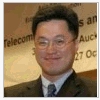
 Mrs.
Solange Ghernaouti – Hélie is full professor
of the University of Lausanne - Faculty of
Business and Economics and member of the
High Level Expert Group (HLEG) for ITU
Global Cybersecurity Agenda (co-leader of
the working areas “Organisational
structures” and “Capacity building”).
Mrs.
Solange Ghernaouti – Hélie is full professor
of the University of Lausanne - Faculty of
Business and Economics and member of the
High Level Expert Group (HLEG) for ITU
Global Cybersecurity Agenda (co-leader of
the working areas “Organisational
structures” and “Capacity building”).