THE AFRICAN
INTERNET & TELECOM SUMMIT
Banjul, The Gambia
5-9 June 2000

uk.jpg (11497 bytes)  English

france.jpg (2954 bytes) Français


Conclusions

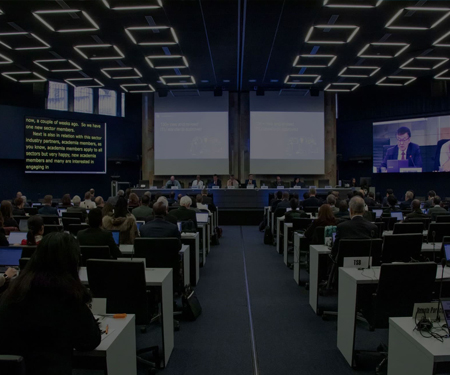
The African Internet & Telecom Summit-organized by the Commonwealth Telecommunication Organisation (CTO) and the International Telecommunication Union (ITU) and hosted by Gambia Telecommunications Limited (GAMTEL)-took place in Banjul, The Gambia from 5 - 9 June 2000. There were 139 participants (including 13 women) from 44 countries (including 39 sub-Saharan). David Souter, Executive Director of the CTO and Margarida Evora-Sagna, ITU Senior Advisor for West Africa, made introductory remarks. Hon M Sarjo Jallow, Gambian Secretary of State for Works, Communications and Information, opened the Summit. Nii Quaynor, Executive Chairman of Network Computer Systems and President of the Internet Society of Ghana, delivered the keynote address.

A range of topics were presented and discussed by the Summit, primarily dealing with the boundaries between the traditional telecommunication sector and new Internet services but also including subjects such as content, regional cooperation, universal access, e-commerce, and mobile Internet. The Summit programme and documents are available on the following web site: www.itu.int/africainternet2000. The following is a brief summary of the main issues raised during the event.

The Internet has made impressive progress in the African region over the last few years. Most noteworthy is that all African countries except one now have direct connections to the international Internet network (Figure 1). There are presently almost one million dial-up subscribers and three million users in Africa. Despite this increase, there is only one Internet user for every 750 people in Africa as compared to the world average of one user for every 30 people and one user per 2-3 people in North America and Europe.

A major constraint to Internet access in Africa is high costs. Average African Internet Service Provider (ISP) prices of US$ 50 are close to a monthly salary for many subscribers (Figure 2). This figure does not include telephone usage charges for dial-up access that can often exceed the ISP subscription charge. One factor behind the high prices relates to the structure of ISP operating costs. The average ISP in Africa pays proportionally more for telecommunications than ISPs in other regions. This is due to limited infrastructure in the region, restricted competition, limitations on ISP activities, high license fees, the lack of national and regional traffic exchange points, and the high cost of international connectivity. Reasons for the high cost of international bandwidth include having to pay full circuit costs, ISPs not able to provide own direct connectivity and lack of transparent pricing from international bandwidth suppliers.

There are a number of ways that Internet expenses might be reduced. Competition in the ISP market could help to lower prices. But competition alone will not be sufficient to dramatically force down prices if ISPs cannot also provide their own infrastructure. Nationwide Internet access for the price of a local call could also be implemented as has been done in a number of African countries. Other Internet-friendly tariff policies include eliminating ISP charges by having ISPs share the local telephone usage charge with the telecom operator, eliminating or reducing local telephone charges and moving towards free, advertising-sponsored Internet access. National and regional Internet exchanges could also be encouraged. For example, South African ISPs have been able to save around US$ 5.75 million annually by exchanging traffic nationally. ISPs might also want to cooperate to pool their bandwidth requirements to obtain cheaper prices through bulk purchases. African countries could also collaborate to present a united front at forums for promoting more equitable international circuit cost sharing (Figure 3).

The growth and sustainability of electronic networks in Africa is dependent on the continent becoming more involved with regional and international Internet-related organizations. These include global groups such as the Internet Corporation for Assigned Names and Numbers (ICANN) and the Internet Society as well as nascent regional groups such as the Africa Internet Registry-African Network Information Center (AfriNIC) and African Network Operators' Group (AFNOG) (Figure 4). The development of regional Internet organizations could help to reduce problems such as "hijacked" domain names and foreign control of IP addresses. The development of national organizations such as local Internet Society chapters or Internet Service Provider associations will enhance coordination and sustainability. Finally, on-going consultation between national telecommunication players such as governments, telecommunication operators, ISPs and users should be encouraged in order to reduce tension and foster dialogue. This might be formalized in a national Internet task force or regular workshops focusing on particular Internet issues.

Africa is at the bottom of the e-commerce pyramid, hampered by limited infrastructure, lack of payment systems, low incomes, inadequate legal framework, lack of confidence and awareness and poor logistics (Figure 5). Most business web sites are static, offering just basic company information. Few African web sites support interactive features such as ordering, payment and delivery.

Some successful e-commerce initiatives are emerging, primarily aimed at overseas Africans and foreigners with the prerequisite income and Internet access. Tourism was identified as one area where significant e-commerce development is taking place in Africa.

Steps for promoting e-commerce include raising awareness by organizing national symposiums and establishing task forces consisting of relevant government agencies, telecommunication operators, ISPs and the private sector. Weaknesses in payment systems can be overcome through arrangements with overseas clearing houses, developing alternatives to credit cards such as pre-paid systems, or having service providers such as telecom operators and ISPs bill clients and collect transaction charges. African countries should also take advantage of the international assistance for e-commerce activities provided by agencies such as the ITU, World Trade Organization, World International Property Organization and United Nations Conference on Trade and Development.

The majority of Africans cannot afford individual access to the Internet. Therefore if the Internet Society's motto of "Internet for All" is to become reality for the region, then it will have to be done via shared access (Figure 6). Indeed, existing Internet access is already shared with many people using the same account in homes, businesses and schools. This needs to be expanded via Internet access from public locations such as télécentres, cyber cafés, schools, post offices, etc. Senegal was cited as a country where télécentres-privately run telecommunication offices-have been successful. There are almost 10'000 télécentres across the country providing telephone, fax and increasingly e-mail and Internet service. Franchises are more likely to be successful and sustainable than other public access models. It was noted that the applications available in télécentres need to be tailored to the clientele. For example, an urban télécentre might not require telemedicine applications since health facilities are typically available in cities whereas a rural one might.

Technological developments caused by the Internet are impacting the voice-centric business and network plans of incumbent telecommunication companies. Communication infrastructures are rapidly evolving into unified IP-based networks where voice is just another application. This poses a major challenge to telecom companies that have made investments and pricing decisions based on what are rapidly becoming outdated assumptions. IP-based networks reduce construction and operating costs which translates into lower prices, a major plus for enhancing access in an impoverished region such as Africa. Telecom operators must act quickly to seize the opportunities from lower costs, new services and increased traffic or they risk being marginalized. Technological developments such as Internet Telephony also pose challenges for regulatory agencies and operators (Figure 7).

The marriage of the Internet and mobile telephony could be of major relevance to Africa. Wireless networks are growing rapidly in the region as a result of competition, lower installation costs and pre-paid cards. The number of mobile connections already exceeds the number of fixed connections in several African countries. The advent of 2 ½ and 3rd generation Internet technologies for mobile (e.g., SMS, WAP, GPRS and IMT-2000) coupled with the lower cost of mobile handsets compared to personal computers suggests that mobile Internet may emerge as a leading way of accessing the Internet in Africa. The launch of WAP services in Congo (Brazzaville) was announced at the Summit (Figure 8).

Capacity building and awareness raising were cited as important challenges for the region. Citizens and institutions need to be made aware of the Internet and its benefits. In order to use the Internet effectively, people need to be trained. There are many ramifications. For example, the technology of the Internet allows for opportunities such as distance learning, which helps overcome lack of local expertise in certain subjects. It also reduces the need to bring students from remote areas. Another ramification is that companies in hi-tech industries such as telecom operators should themselves be at the forefront of training and knowledge (Figure 9). The example of Telkom South Africa was provided as a case where considerable resources have been expended to bring staff up to speed on information technology. Yet another ramification is that if local opportunities are not available for information technology professionals they will immigrate to developed countries where demand is high. At the same time the high demand for computer professionals in developed countries is a strong rationale to develop offshore software processing centers in Africa as in other regions and examples from Senegal and Ghana were mentioned.

The development of African applications and content is important for broadening the appeal of the Internet in the region and sustaining its growth. It was also emphasized that creation of and access to information is of strategic importance for development in Africa. The large number of dialects used in the region and the fact that most Africans do not speak English, French or Portuguese are major challenges (Figure 10). Applications should be developed in local languages that are relevant to African needs. The need for intermediaries was also emphasized. Just as scribes write letters for those who cannot, digital scribes could assist illiterate or unskilled computer users to navigate the web. There is also a need to counteract what is perceived as bias in the available content there currently is for Africa, much of which has been developed outside the continent. Another reason for developing local content is the need to preserve cultural identity. One example is digitizing artifacts before they deteriorate due to poor conservation in museums. Governments should boost the availability of local content through the development of citizen-helpful applications such as on-line applications for government benefits and services, agricultural market information, environment monitoring and education and health software. The establishment of national content centres where resources and expertise could be shared was also cited as a possibility for boosting content creation in the region. The Open Software movement and availability of free applications such as e-mail, discussion lists and web site hosting can help reduce the cost of content development on the continent.

Funding for Internet infrastructure and services is an important issue in the region where investment capital is scarce. Private sector involvement is critical for the success of the Internet in the region. The Internet has been one of the few markets which has been open to private investment. As a result, in those countries with a competitive environment, there are many private ISPs. Additional private investment would be available if restrictions on activities of ISPs were lifted (e.g., ability to provide own infrastructure). This could help expand access to poorer market segments (Figure 11). Donor assistance has also played a major role in the development of the Internet in Africa. Many countries in the region have established international Internet connectivity as a result of assistance from the United States Leland Initiative as well as the UNDP Internet Initiative for Africa. Assistance for Internet activities is available from some donor agencies and countries must propose suitable projects to take advantage of this. At the same time, other donor agencies must be sensitive to the importance of the Internet for development and not focus all assistance only on basic sectors. Regional cooperation can also help foster Internet development through participation in regional infrastructure development projects (e.g., Comesa) that lower overall costs.

The Summit identified several areas where CTO and ITU support could prove beneficial for fostering Internet growth in the region:

  • Help with the mobilization of resources for network infrastructure, public access points and human and institutional capacity building during the current, pre-sustainable phase of Internet development in the region

  • Support research on how the Internet assists human and economic development with specific reference to access, poverty alleviation and gender equality

  • Work with telecommunication businesses as they restructure to meet the challenges of new technology, new forms of service provision and new types of customer demand, especially as IP networks develop

  • Sensitize governments and the business, health and education community about the importance of the Internet and encouraging them to adopt supportive policies

  • Organize workshops for bringing together relevant government agencies, telecommunication operators, Internet Service Providers and users to discuss Internet issues

  • Work closely with the industry to identify areas where the high costs of international internet access and traffic exchange can be reduced


Back to Home Page